
←
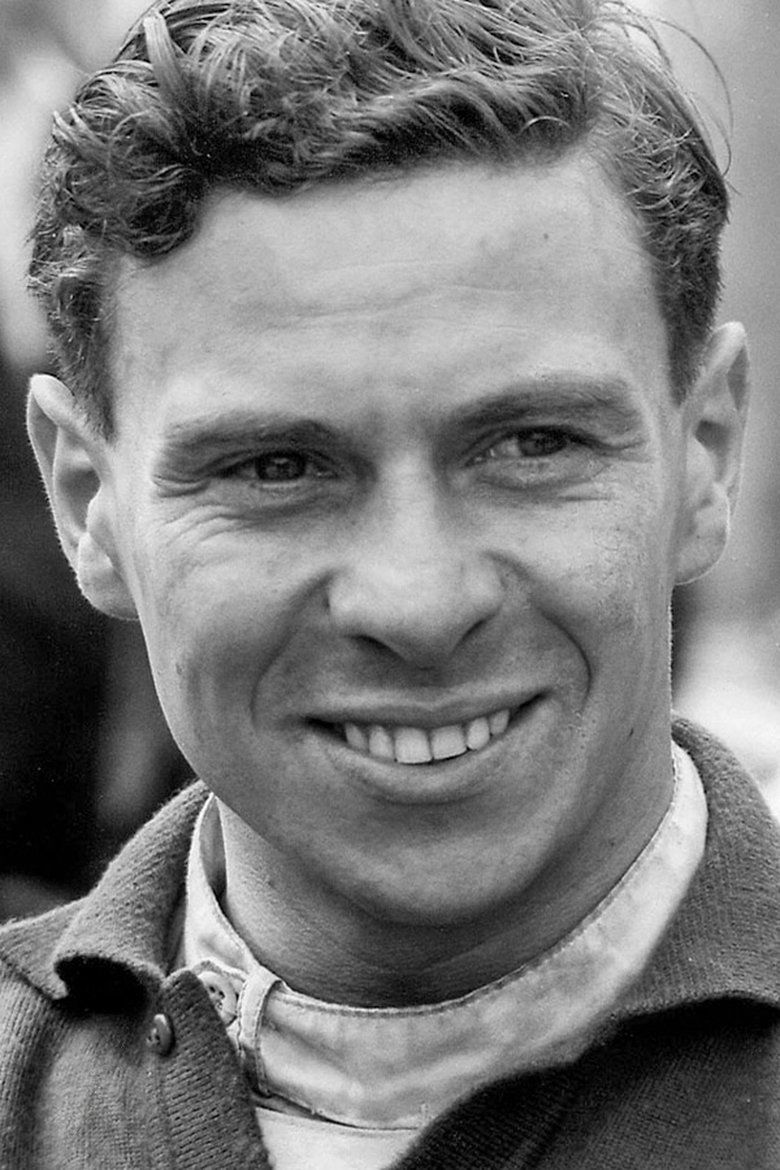
Meet Jim Clark
★ Acting🎥 5 films📺 1 TV shows📅 1963–2009🔥 0
Born in - not listed
1936-03-04 (age 32 at death)
Died 1968-04-07
Jim Clark (March 4, 1936 – April 7, 1968) was a Scottish Formula 1 driver, widely regarded as one of the greatest talents in motorsport history. Born in Kilmany, Scotland, and raised on a farm in the Scottish Borders, Clark began racing in local events and quickly gained attention for his skill and smooth driving style. He joined Formula 1 in 1960 with Team Lotus, forming a legendary partnership with team owner Colin Chapman.
Clark won his first World Championship in 1963 and repeated the feat in 1965, dominating the season by winning six of the ten races. That same year, he also won the prestigious Indianapolis 500, showcasing his versatility and talent across different types of racing. Known for his calm demeanor, exceptional control, and precise driving, Clark was highly respected by both fans and competitors.
Tragically, Clark's career was cut short on April 7, 1968, when he died in a crash during a Formula 2 race at Hockenheim, Germany. His death sent shockwaves through the racing world. Today, Jim Clark’s legacy lives on as one of the sport’s true legends, remembered for his remarkable skill, humility, and the lasting impact he left on Formula 1.
From Wikipedia
James Clark (4 March 1936 – 7 April 1968) was a British racing driver from Scotland who competed in Formula One from 1960 to 1968. Clark won two Formula One World Drivers' Championship titles, which he won in 1963 and 1965 with Lotus, and—at the time of his death—held the records for most wins (25), pole positions (33), and fastest laps (28), among others. In American open-wheel racing, Clark won the Indianapolis 500 in 1965 with Lotus, becoming the first non-American winner of the race in 49 years.
Born in Fife and raised in the Scottish Borders, Clark started his racing career in road rallying and hillclimbing. By 1958, Clark had graduated to sports car racing in national competition with Border Reivers, racing the Jaguar D-Type and Porsche 356, where he attracted the attention of Lotus founder Colin Chapman. Driving a Lotus Elite, Clark finished second-in-class at the 24 Hours of Le Mans in 1959. Clark made his formula racing debut the following year in Formula Junior, winning the championship ahead of reigning seven-time Grand Prix motorcycle racing World Champion John Surtees. After immediately impressing in Formula Two, Clark was promoted to Formula One with Lotus for the remainder of the 1960 season alongside Surtees and Innes Ireland, making his debut at the Dutch Grand Prix and scoring his maiden podium four races later in Portugal; Clark finished third overall at Le Mans that year.
Following multiple further podiums in 1961, Lotus fielded the highly-successful 25 chassis from 1962 onwards. Clark took his maiden win at the 1962 Belgian Grand Prix, achieving further wins at his home Grand Prix in Great Britain and in the United States, as he finished runner-up to career rival Graham Hill. After winning a then-record seven Grands Prix during his 1963 campaign, Clark won his maiden title, earning widespread acclaim for his performances. Despite winning the most races the following season, reliability issues with the Lotus 33 saw him fall to third in the standings. However, the same chassis would see Clark win again in 1965, as he took six victories in that season. Lotus then struggled to adapt to the 3-litre engine era, with Clark only able to win the United States Grand Prix during his second title defence. 1967 was more successful for Lotus under Cosworth power, with Clark taking four wins throughout the season.
While leading the 1968 World Drivers' Championship, Clark died as a result of an accident during a Formula Two race at the Hockenheimring. Clark held the Formula One records for the most race wins until 1973, pole positions until 1989, and fastest laps also until 1989. He still holds several records in 2025, including the most grand slams (8). A versatile driver, Clark found success outside of formula racing in sports cars, touring cars, and American open-wheel racing. Clark was a champion in the British Saloon Car Championship, winning every race he entered in 1964, as well as in French and British Formula Two. He was a three-time champion of the Tasman Series, winning in 1965, 1967 and 1968, with a record 15 wins in 32 starts. In rallying, he entered the Rally of Great Britain in 1966. His successes in 1965—winning championships in Formula One, the Tasman Series, French Formula Two, and British Formula Two—make him the only driver in history to have won multiple championships in a single season alongside a World Drivers' Championship. Clark was inducted into the International Motorsports Hall of Fame in 1990.
Web: Not available
Powered by TMDB. © MyMovieScripts.com. All Rights Reserved. Make your videos interactive|Built by  TouchPoint.Video
TouchPoint.Video